The Community Focus Channel is supported with funding from Johnson & Johnson (Gold).
The Lymphoma Channel is supported with funding from AstraZeneca (Diamond), Johnson & Johnson (Gold), Takeda (Silver) and Galapagos (Bronze).
VJHemOnc is an independent medical education platform. Supporters, including channel supporters, have no influence over the production of content. The levels of sponsorship listed are reflective of the amount of funding given to support the channel.
EHA 2026 | Best practices for safely delivering bispecific antibodies in lymphoma
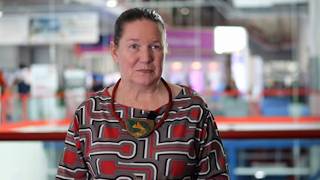
Wendy Osborne, MBBS (Hons), MRCP, FRCPath, Freeman Hospital, Newcastle upon Tyne Hospitals NHS Foundation Trust, Newcastle, UK, outlines best practices for initiating and monitoring bispecific antibody therapy in lymphoma, covering patient assessment, prevention and recognition of CRS and ICANS, infection prophylaxis, and patient education to support safe outpatient treatment. This interview took place at the 31st Congress of the European Hematology Association (EHA) in Stockholm, Sweden.
These works are owned by Magdalen Medical Publishing (MMP) and are protected by copyright laws and treaties around the world. All rights are reserved.
Transcript
BSH Good Practice paper for the delivering of bispecifics for lymphoma in the BJ Haem has very much focused on how we can ensure that these important drugs are accessed by as many clinicians as possible so that patients can benefit from their effectiveness. And it involves, first of all, where we can use these bispecifics. So obviously at the moment now in the UK, we are able to use glofitamab or mosunetuzumab in a second line setting, such as glofitamab...
BSH Good Practice paper for the delivering of bispecifics for lymphoma in the BJ Haem has very much focused on how we can ensure that these important drugs are accessed by as many clinicians as possible so that patients can benefit from their effectiveness. And it involves, first of all, where we can use these bispecifics. So obviously at the moment now in the UK, we are able to use glofitamab or mosunetuzumab in a second line setting, such as glofitamab. We can use glofitamab or epcoritamab monotherapy in a third line plus setting, such as epcoritamab. And so understanding where these drugs fit in the patient pathway is important. It also focuses on what we talk to our patients about in clinic, making sure that patients are aware of cytokine release syndrome, that they do need to monitor their temperature, explain a little bit about neurotoxicity. Neurotoxicity or ICANS is very rare with bispecifics, but it’s important that patients know that they must contact us if they have any unusual neurology. Usually, we deliver all of this as an outpatient. We may need one overnight stay for the first dose of glofitamab when patients require observation for 16 hours, so we usually keep patients in overnight. But for the rest of the delivery, it’s as an outpatient. And then how we deliver these treatments, certainly in a monotherapy setting, glofitamab is intravenous, fixed duration. Epcoritamab is subcutaneous treatment to progression. And so talking to our patients about which one would suit them better, because the efficacy and toxicity seems very similar between the two. And then also thinking about where a patient should go if they do have side effects. So for some hospitals, it’s directly into their haematology unit. For other hospitals, it’s straight into their A&E or emergency department. And therefore, it’s important that the staff in that department are aware of cytokine release syndrome and don’t just think that the patient has a temperature because of infection. And that can be done in different ways. Our patients often wear just a wristband that says, I’ve had a bispecific antibody. Please contact the haematologist on call. For other patients, there’s an alert on the computer system. It doesn’t really matter. It’s just important that if there’s a different toxicity that people are aware of that. And then finally, the other thing that needs to be made aware of is the risk of infection. And I certainly, and in our good practice paper, it’s recommended that patients are given prophylactic acyclovir and cotrimoxazole, that patients are vaccinated. And we do also monitor people’s immunoglobulin levels and replace if they have recurrent infections alongside low immunoglobulin levels. So when patients are started on a bispecific antibody, it’s really important that we mitigate against CRS. So that includes prophylactic steroids. So I would use dexamethasone, making sure that they’ve had antihistamine and paracetamol before having their first dose of their step up. With glofitamab, we have to give a day one obinutuzumab as well for B cell depletion. And the step up dosing is really important. Once patients have had their bispecific, the risk of CRS depends on which antibody they’ve had. So for glofitamab, the highest rate is with the first 2.5 milligram dose, whereas for epcoritamab, it’s with the third dose, certainly for DLBCL, for the first third dose, which is the first full dose of 48 milligrams. And at that point is when patients need an overnight stay for glofitamab. The requirement for that has just been removed for epcoritamab. But I certainly ask my patients to monitor their temperature if they’re at home. And generally, we ask our patients, as we do for all patients having chemotherapy, to monitor their temperature a couple of times a day to make sure that they don’t have any even just early grade, low grade CRS and to contact us if they have any unusual neurotoxicity. And after the first cycle or two, the chances of these CRS events and ICANS events are very low. And so most of these are just managed with a quick hospital visit for their infusion or injection. So, bispecific antibodies are so effective. They’re targeting the CD3 T-cell for the patient’s own T-cell against the CD20, the patient’s B-cell lymphoma cell, bringing them together, release of cytokines and tumor cell death. And this release of cytokines can lead to cytokine release syndrome by which the patient has an elevated temperature. Sometimes they drop their blood pressure, may become a bit tachycardic, may become a bit hypoxic. So generally, the first thing for the patient to be aware of is to monitor themselves, their own temperature, because for any CRS, a temperature has to happen. And that’s sort of the main advice. And most of our patients are already used to doing this because they’ve been failed by first line treatment where they’ve monitored their temperature as well. And I think generally neurotoxicity is very rare. So I think if I’m honest, I worry more about people not using these effective drugs because of fear of neurotoxicity rather than the neurotoxicity itself. But I do ask our patients to contact us if they have any concerns about any neurological symptoms. And then the final thing, it’s always important that we ask our patients to monitor for infection. All of these treatments do impact the immune system and so if patients have got infections or any particularly prolonged infections, I think it’s essential that they contact us.
This transcript is AI-generated. While we strive for accuracy, please verify this copy with the video.
Read more...