CAR-T Meeting 2025 | The incidence of cardiac complications after CAR T-cell therapy
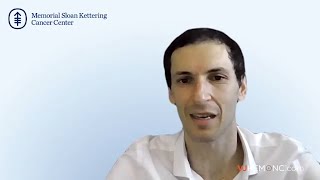
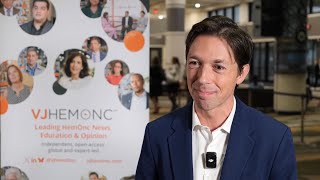
Roni Shouval, MD, PhD, Memorial Sloan Kettering Cancer Center, New York, NY, comments on the incidence of cardiac complications after CAR T-cell therapy, stating that the incidence may be higher than initially thought due to the exclusion of patients with significant cardiac comorbidities from pivotal clinical trials. Dr Shouval notes that real-world data suggest a varying incidence of cardiotoxicity, with cardiomyopathy seen in 1-15% of patients, and emphasizes the need for vigilant monitoring to capture these events, which may have long-term implications for patients. This interview took place at the EHA-EBMT 7th European CAR T-cell Meeting, held in Strasbourg, France.
These works are owned by Magdalen Medical Publishing (MMP) and are protected by copyright laws and treaties around the world. All rights are reserved.
Transcript (AI-generated)
The incidence of CAR-T associated complications is probably higher than we initially thought. The pivotal clinical trials leading to the FDA approval of CAR T-cell products excluded patients with significant cardiac comorbidities. And that perhaps explains why we see a very low incidence, essentially of cardiac toxicities, in these populations. But in real-world data, it varies depending on the type of cardiotoxicity...
The incidence of CAR-T associated complications is probably higher than we initially thought. The pivotal clinical trials leading to the FDA approval of CAR T-cell products excluded patients with significant cardiac comorbidities. And that perhaps explains why we see a very low incidence, essentially of cardiac toxicities, in these populations. But in real-world data, it varies depending on the type of cardiotoxicity. But for instance, cardiomyopathy is seen somewhere between 1 to 15 percent. So it’s clearly a challenge and we’re probably even underestimating it because usually most evaluations of cardiotoxicity are event-driven. So something happens that provokes, for instance, an echocardiogram to be done on the patient. So I think the take-home message is we should be vigilant in monitoring these patients and potentially capturing these cardiac events, which may have long-term implications for the patients.
This transcript is AI-generated. While we strive for accuracy, please verify this copy with the video.
Read more...

Disclosures
Speaker Honorarium from Incyte.