The Community Focus Channel is supported with funding from Johnson & Johnson (Gold).
The Lymphoma Channel is supported with funding from AstraZeneca (Diamond), Johnson & Johnson (Gold), Takeda (Silver) and Galapagos (Bronze).
VJHemOnc is an independent medical education platform. Supporters, including channel supporters, have no influence over the production of content. The levels of sponsorship listed are reflective of the amount of funding given to support the channel.
EBMT 2026 | Addressing the misconception that the side effects of CAR-T are too severe for patients with DLBCL
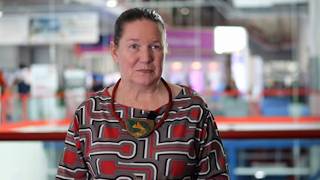
Birte Friedrichs, MD, Düsseldorf University Hospital, Düsseldorf, Germany, discusses the misconception that the side effects of CAR T-cell therapy are too severe for patients with diffuse large B-cell lymphoma (DLBCL) and its impact on referral patterns. Dr Friedrichs highlights that patients should be evaluated at a specialist center by a multidisciplinary team and strongly encourages early referral before deciding against CAR-T. This interview took place at the 52nd Annual Meeting of the EBMT in Madrid, Spain.
These works are owned by Magdalen Medical Publishing (MMP) and are protected by copyright laws and treaties around the world. All rights are reserved.
Transcript
I think it’s important to acknowledge that CAR T-cell therapy can be associated with significant toxicities, particularly CRS and neurotoxicity, but also infections, and that these require experience and management. But I think we have learned over the past years that these events are usually predictable in a certain way – they occur early and in most cases they can be managed with established strategies, including now also early intervention and even product selection...
I think it’s important to acknowledge that CAR T-cell therapy can be associated with significant toxicities, particularly CRS and neurotoxicity, but also infections, and that these require experience and management. But I think we have learned over the past years that these events are usually predictable in a certain way – they occur early and in most cases they can be managed with established strategies, including now also early intervention and even product selection. So while the toxicities are very real, the perception that they are uncontrollable or even prohibitive for many patients is not really aligned with the current experience. So especially outside of specialized centers, this perception can influence referral patterns, and as a result, some patients who might benefit from CAR T-cell therapy might either be referred late or not referred at all. So I think that’s where the biggest impact of the misconception lies, not necessarily in the real eligibility itself, but in access to expert evaluation. So my message would be that this decision about eligibility and the patient being more sensitive to side effects doesn’t have to be taken alone. So CAR T-cell therapy is highly specialized and the patient should ideally also be evaluated in such an experienced center where the benefits and the risks can be assessed in a multidisciplinary team. And even patients who may initially seem fragile can sometimes be managed safely with the right support. And I would strongly encourage early referral or at least discussion with CAR T-cell centers before deciding against CAR T-cell therapy as an option.
This transcript is AI-generated. While we strive for accuracy, please verify this copy with the video.
Read more...