The Lymphoma Channel is supported with funding from AstraZeneca (Diamond), BMS (Gold), Johnson & Johnson (Gold), Takeda (Silver) and Galapagos (Bronze).
VJHemOnc is an independent medical education platform. Supporters, including channel supporters, have no influence over the production of content. The levels of sponsorship listed are reflective of the amount of funding given to support the channel.
CAR-T Meeting 2025 | CAR-T in B-cell lymphomas: long-term outcomes, risk of dropout, and late effects
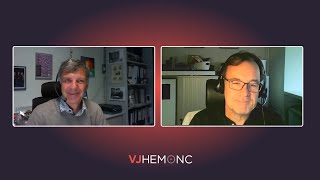
Andrea Kuhnl, MD, King’s College Hospital, London, United Kingdom, briefly discusses the long-term outcomes of CAR T-cell therapy in patients with B-cell lymphomas, highlighting the high response rates and durable remission rates observed in approximately 40-50% of patients receiving CD19 CAR-T across different subtypes. Dr Kuhnl also emphasizes the importance of considering the potential challenges and complications associated with CAR-T, including dropout and infection, while noting that patient-reported outcomes and quality of life measures are generally favorable. This interview took place at the EHA-EBMT 7th European CAR T-cell Meeting, held in Strasbourg, France.
These works are owned by Magdalen Medical Publishing (MMP) and are protected by copyright laws and treaties around the world. All rights are reserved.
Transcript (AI-generated)
So we have now quite a good level of evidence both from clinical trials and real-world data sets to confirm high response rates and durable remissions in about 40 to 50% of patients receiving CD19 CAR-T across different B-cell lymphoma subtypes. For large B-cell lymphoma, CD19 CAR-T is a curative treatment. For indolent lymphomas like Waldenström, follicular lymphoma, we will need to wait a little bit longer follow-up to know whether this might provide a cure or at least a functional cure...
So we have now quite a good level of evidence both from clinical trials and real-world data sets to confirm high response rates and durable remissions in about 40 to 50% of patients receiving CD19 CAR-T across different B-cell lymphoma subtypes. For large B-cell lymphoma, CD19 CAR-T is a curative treatment. For indolent lymphomas like Waldenström, follicular lymphoma, we will need to wait a little bit longer follow-up to know whether this might provide a cure or at least a functional cure.
Beyond the long-term remission rates, there are certain considerations relevant for patients who consider CAR-T over alternative off-the-shelf therapies. For example, the risk of dropout, becoming too unwell to receive the cells. Patients have very poor outcomes and we know that certain patient groups have a higher risk of dropout.
In addition, there is an ongoing risk of infection after CAR-T and a significant non-relapse mortality and again infectious complications being the main driver for non-relapse deaths. But encouragingly, patient-reported outcomes and quality of life measures are quite favorable after CAR-T, so it’s really the infectious complications as the main late effect after CAR-T.
This transcript is AI-generated. While we strive for accuracy, please verify this copy with the video.
Read more...


Disclosures
Consultancy: Kite Gilead, Roche, Abbvie, BMS; Honoraria: Kite Gilead, Astra Zeneca.