The Community Focus Channel is supported with funding from Johnson & Johnson (Gold).
The Lymphoma Channel is supported with funding from AstraZeneca (Diamond), Johnson & Johnson (Gold), Takeda (Silver) and Galapagos (Bronze).
VJHemOnc is an independent medical education platform. Supporters, including channel supporters, have no influence over the production of content. The levels of sponsorship listed are reflective of the amount of funding given to support the channel.
ASCO 2026 | Selecting between approved bispecific antibodies in follicular lymphoma
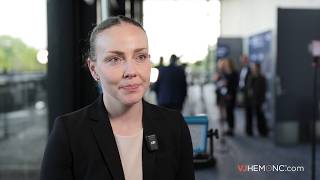
Jessica Allen, MD, Huntsman Cancer Institute, Salt Lake City, UT, shares insight into selecting a bispecific antibody for a patient with follicular lymphoma (FL), highlighting the lack of head-to-head comparison data between mosunetuzumab and epcoritamab, the two FDA-approved bispecifics for this disease. She notes that the choice between these two options should be based on patient-specific factors, such as age, frailty, and disease aggressiveness, as well as considerations of treatment logistics and quality of life. This interview took place during the 2026 American Society of Clinical Oncology (ASCO) Meeting in Chicago, IL.
These works are owned by Magdalen Medical Publishing (MMP) and are protected by copyright laws and treaties around the world. All rights are reserved.
Transcript
We don’t have head-to-head data comparing the two approved drugs in the U.S., mosunetuzumab and epcoritamab, so we can’t say for sure that one’s more effective or more safe than the other. And to bring my study into it, unfortunately, we didn’t power the study to answer that question, and most patients were treated with mosunetuzumab. So my study doesn’t really answer that question, but it will be interesting to see in the future as our data matures...
We don’t have head-to-head data comparing the two approved drugs in the U.S., mosunetuzumab and epcoritamab, so we can’t say for sure that one’s more effective or more safe than the other. And to bring my study into it, unfortunately, we didn’t power the study to answer that question, and most patients were treated with mosunetuzumab. So my study doesn’t really answer that question, but it will be interesting to see in the future as our data matures. But that being said, what we do know is there are differences in logistics of the way each bispecific is given. Mosunetuzumab is given in a fixed duration, whereas epcoritamab is given until patients progress. So for a patient that’s older, more frail, or has been on a lot of other treatments already, you may favor mosunetuzumab because you want to limit the time on B-cell depleting therapy, limit the time that they’re needing treatment at all. There was also a recent quality of life study that showed there’s less time toxicity with mosunetuzumab. So for patients that maybe live very far away from your center or really just want to prioritize being at home and not at the hospital, mosunetuzumab may be better. Conversely, epcoritamab could be ideal if someone has more aggressive disease, you want to keep treating them, or for patients that you’re worried about transformation to large cell lymphoma because epcoritamab is approved in DLBCL as well. So I think it comes down to the patient in front of you and shared decision-making. Overall, they’re both good options and neither is a wrong choice at this point.
This transcript is AI-generated. While we strive for accuracy, please verify this copy with the video.
Read more...