The Community Focus Channel is supported with funding from Johnson & Johnson (Gold).
VJHemOnc is an independent medical education platform. Supporters, including channel supporters, have no influence over the production of content. The levels of sponsorship listed are reflective of the amount of funding given to support the channel.
SOHO 2026 | Bridging the gap between innovation and community practice in ALL treatment
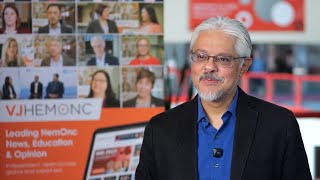
Bijal Shah, MD, Moffitt Cancer Center, Tampa, FL, discusses the gap between what is possible in acute lymphoblastic leukemia (ALL) treatment and what is currently being delivered in community practice, highlighting the need for better education and earlier integration of novel therapies into clinical trials. Dr Shah also emphasizes the importance of improving payer communication to reduce reimbursement-related barriers. This interview took place at the 14th Annual Meeting of the Society of Hematologic Oncology (SOHO 2026) in Houston, TX.
These works are owned by Magdalen Medical Publishing (MMP) and are protected by copyright laws and treaties around the world. All rights are reserved.
Transcript
I think there are several gaps. I think the first is always going to be the education gap. That’s the reason why I love this meeting, is trying to understand not just where we are, but where the ball’s moving. That can be in the realm of bispecifics, that can be in the realm of CAR T-cell therapy, that can be in the realm of novel agents, novel molecular tools that are coming around the corner...
I think there are several gaps. I think the first is always going to be the education gap. That’s the reason why I love this meeting, is trying to understand not just where we are, but where the ball’s moving. That can be in the realm of bispecifics, that can be in the realm of CAR T-cell therapy, that can be in the realm of novel agents, novel molecular tools that are coming around the corner. But what we really want to do is try to come up with designs, trial designs that allow for that early incorporation of agents. Again, that can be a CalGV, that can be a hyper-CVAD or a mini-CVD or whatever it might be. But how do we develop a platform for discovery? Because it’s going to make it a lot easier to transmit that message to our community physicians because it’s just sort of, okay, and then we add it. Or then we subtract it. And really be able to tell a message that’s consistent. I think that’s one piece of it, right? So the education and simplified backbones for the incorporation of novel agents.
The second thing is always going to be payers and reimbursement and trying to understand how we better partner in that space. And so we’ve had lots of interesting challenges, right? Patients coming to our center because, look, they can get bispecifics in larger community settings in Florida. They can get inotuzumab in larger community settings in Florida. But what does it mean when they’re coming to us now that they have cirrhosis or VOD as a consequence of inotuzumab or their liver is no longer working after receiving, you know, toxic agents that, again, that sort of lead to dysfunctional liver? What does it mean if their kidneys aren’t working? Well, what it means for us is trials are now off the table, right? We’re in a position where we can’t innovate. We’re going to be using what agents we can, but in someone where we’re treating. And the term I used, I think, I want to say the last iwCAR, but let me double, I have to go back and think about it. We can’t approach the care of patients with acute leukemias, particularly acute lymphoblastic leukemia, as an act of desperation, right? We have to be thinking forward. And so if we think that blina is important, if we think that ino is important, okay, let’s come up with an approach that brings those agents early. If we think CAR is important, as again, you know how passionate I am about CAR T-cell immunotherapy, let’s try and figure out how we incorporate that early so that we’re not behind the eight ball with what we think are our most effective tools or our most effective combinations. So working with our community physicians. And I mentioned in that same breath, just very briefly, when I talk about education, and again, I’m focused on education because this is about 2026. And so, you know, when I talk about education, I think we also have to find a way to communicate what we’re doing to payers. I know that sounds crazy, but payers are going to reference the guidelines. But the guidelines are a way of trying to communicate, hey, here are the options that are available without telling a piece of story. Right. That those guidelines reflect, hey, there was this trial and this trial and this trial and this trial and trying to acknowledge the bulk of work that’s been done in the space. But it’s not a story of, hey, this is how you get from point A to point B in the most efficient or most cost-effective manner. That’s never what the guidelines were designed to do. And so we have to figure out how to network more effectively. I mean, it’s not that we don’t do it, but we have to figure out how to network more effectively with our payers so that we’re also not seeing rejections on the back end. Because if the therapy is not paid for, I hate to say it, in this day and age, right? Blina is, what, 200,000 or so a cycle. Ino is, I think, $150,000, something like that a cycle. CAR-T, $500,000, $600,000. A denial isn’t just denial to pay. That is actually refusing access. And that’s a terrible thing. So that’s the most concise answer I can give you. But hopefully, the educational component to that across the again with our community partners and our payers and then understanding how we design studies to allow for that plug-and-play to make it a simpler lift all of those things will help inform better outcomes.
This transcript is AI-generated. While we strive for accuracy, please verify this copy with the video.
Read more...