EHA 2026 | OPTI-AML: 14-day venetoclax falls short of non-inferiority in AML
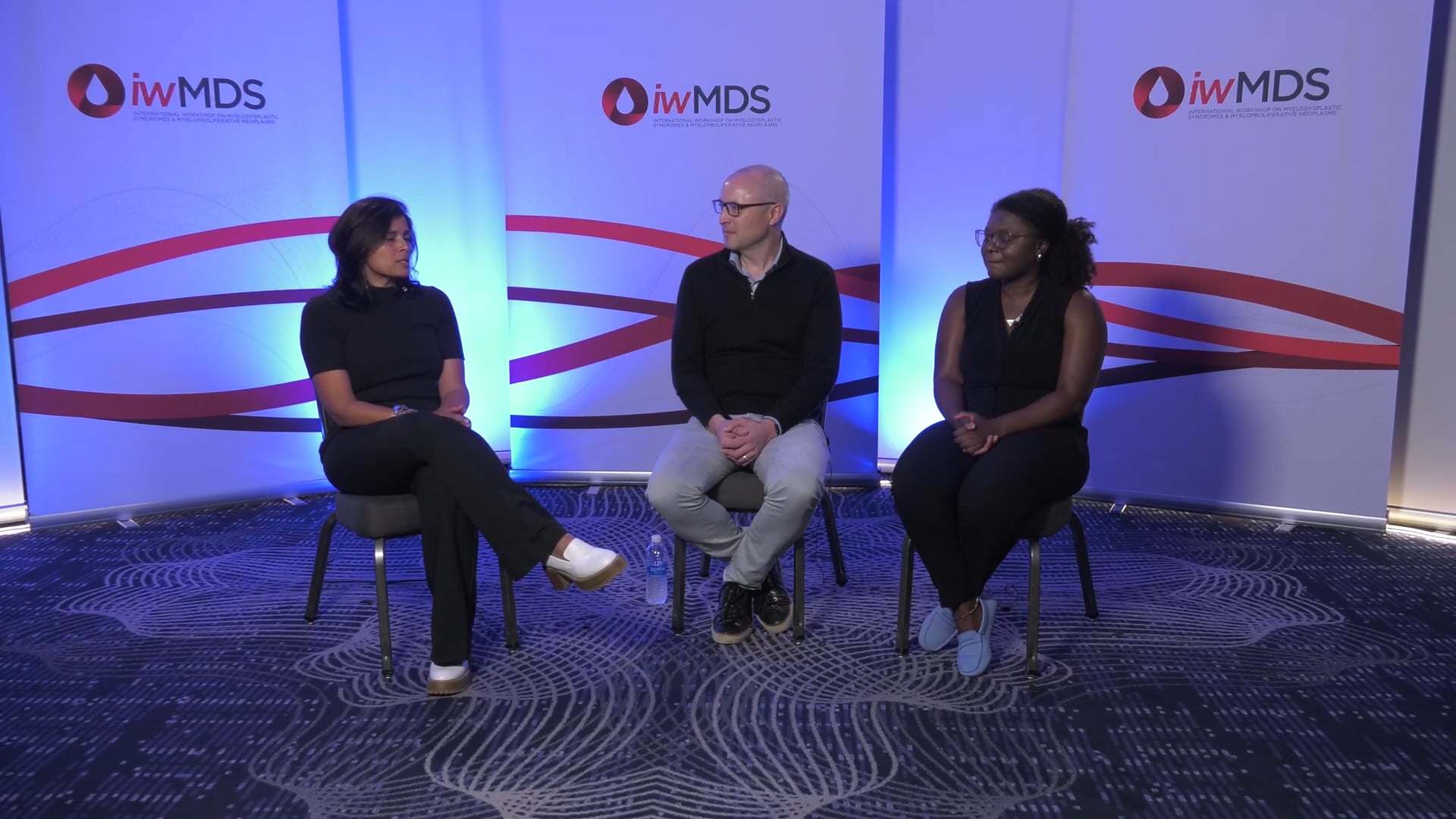
Uma Borate, MD, The Ohio State University, Columbus, OH, discusses results from the randomized Phase II OPTI-AML trial (NCT030139980) comparing 28 versus 14 days of venetoclax during the first two cycles of azacitidine-based therapy in patients with newly diagnosed acute myeloid leukemia (AML) aged 60 years and older. She highlights the finding that the 14-day schedule did not meet the study’s non-inferiority endpoint, with the greatest difference observed in patients with NPM1- or IDH2-mutated disease, while shorter venetoclax exposure did not appear to reduce cytopenias, hospitalizations, or early serious adverse events. This interview took place at the 31st Congress of the European Hematology Association (EHA) in Stockholm, Sweden.
These works are owned by Magdalen Medical Publishing (MMP) and are protected by copyright laws and treaties around the world. All rights are reserved.
Transcript
OPTI-AML was a phase two study, randomizing 169 patients to either 28 days of venetoclax for two cycles at the start of therapy versus 14 days of venetoclax for two cycles at the start of therapy. These were all patients 60 and older who were not eligible for induction, and they were all patients of all genomic subtypes. So nobody was excluded from the study, including TP53, NPM1, IDH, FLT3, so on and so forth...
OPTI-AML was a phase two study, randomizing 169 patients to either 28 days of venetoclax for two cycles at the start of therapy versus 14 days of venetoclax for two cycles at the start of therapy. These were all patients 60 and older who were not eligible for induction, and they were all patients of all genomic subtypes. So nobody was excluded from the study, including TP53, NPM1, IDH, FLT3, so on and so forth. What our study revealed is the way the study was designed was to assume that 14 days of venetoclax would not be inferior to 28 days of venetoclax with the primary endpoint of a complete remission. What our study found that, in fact, 14 days of venetoclax was not equivalent to 28 days of venetoclax. It failed the non-inferiority test. The complete remission rate with 28 days of venetoclax for two cycles was almost 49% as opposed to 43% with 14 days. And what we found was this was especially important in the NPM1 and IDH2 mutated patients because their complete remission rates were at least two times better with 28 days and 14 days. If you took out the NPM1 and IDH2, the CR rates were equivalent. So I think for me, the significance of this study is you can’t assume that less venetoclax, especially in the first two cycles, is going to be the same as the 28 days for two cycles, especially in NPM1 and IDH2 mutated patients. And I think as we move the treatments of AML forward and we add a third agent or a triplet into this backbone, we have to be really thoughtful on what we do with the venetoclax dosing. The other interesting part of our study is in the 14 days venetoclax where the dose was reduced substantially, there was no difference. There was no difference in the decrease in counts. There was no difference in people admitted to the hospital. There was no difference in people getting serious events or early deaths. So it did not look like decreasing the venetoclax dose helped with any of that, which was a surprising but significant finding. There’s still a lot more work to be done, especially because, you know, azacitidine and venetoclax was really important in AML treatment as we’re adding a third agent to it. And I think we still don’t know exactly how much venetoclax to use in different types of AML.
This transcript is AI-generated. While we strive for accuracy, please verify this copy with the video.
Read more...