The Lymphoma Channel is supported with funding from AstraZeneca (Diamond), Johnson & Johnson (Gold), Takeda (Silver) and Galapagos (Bronze).
VJHemOnc is an independent medical education platform. Supporters, including channel supporters, have no influence over the production of content. The levels of sponsorship listed are reflective of the amount of funding given to support the channel.
EBMT 2026 | Outcomes after anti-CD19 CAR T-cell therapy in primary mediastinal B-cell lymphoma
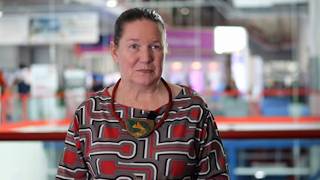
Rémy Duléry, MD, PhD, Dana-Farber Cancer Institute, Boston, MA, discusses the outcomes from a large real-world registry study analyzing anti-CD19 CAR T-cell therapy in primary mediastinal B-cell lymphoma (PMBCL). Dr Duléry highlights that the study supports long-term use of this therapeutic approach for patients with relapsed/refractory (R/R) disease, with favorable outcomes and durable disease control observed. This interview took place at the 52nd Annual Meeting of the EBMT in Madrid, Spain.
These works are owned by Magdalen Medical Publishing (MMP) and are protected by copyright laws and treaties around the world. All rights are reserved.
Transcript
Primary mediastinal B-cell lymphoma is a distinct large B-cell lymphoma that mainly affects young patients and has poor outcomes in relapse or refractory settings. CAR T-cell therapy has shown promising efficacy; however, the evidence base is limited, mainly driven by subgroup analysis of pivotal trials or small real-world series, mostly with axi-cel. Major gaps remain regarding older CAR constructs, the long-term outcomes and prognostic factors...
Primary mediastinal B-cell lymphoma is a distinct large B-cell lymphoma that mainly affects young patients and has poor outcomes in relapse or refractory settings. CAR T-cell therapy has shown promising efficacy; however, the evidence base is limited, mainly driven by subgroup analysis of pivotal trials or small real-world series, mostly with axi-cel. Major gaps remain regarding older CAR constructs, the long-term outcomes and prognostic factors. For these reasons, we conducted a multi-center real-world evidence study using the EBMT registry, including adult PMBCL patients who received anti-CD19 CAR T-cell therapy between 2018 and 2025.
We included a total of 284 patients. 248 received axi-el, 23 liso-cel, and 13 tisa-cel. Well, the key message is that outcomes were favorable with durable disease control. The two-year overall survival was 75.5% and the progression-free survival 58%. Importantly, outcomes were consistent across age groups with no impact of age on survival, relapse incidence, and non-relapse mortality. We also observed no difference in overall survival and non-relapse mortality across CAR constructs. Relapse remained the main cause of treatment failure with a low incidence of non-relapse mortality at 2.4% at one year.
In multivariable analysis, disease status at lymphodepletion emerged as the primary driver of outcomes impacting relapse incidence, progression-free survival, and with a borderline effect on overall survival. ECOG performance status also impacted overall survival, while age had absolutely no impact on any of the outcomes. So, to conclude, this is the largest real-world evidence study on CAR T-cell therapy for primary mediastinal B-cell lymphoma. Our findings support the broad use of anti-CD19 CAR T-cells for relapsed or refractory patients, and also highlight the importance of good disease control before infusion. Ongoing studies will further refine the safety and treatment sequencing, including the impact of prior or post-chemotherapies.
This transcript is AI-generated. While we strive for accuracy, please verify this copy with the video.
Read more...


Disclosures
Non-financial support from Kite/Gilead.