CAR-T Meeting 2026 | Understanding core regulators of CAR T-cell persistence
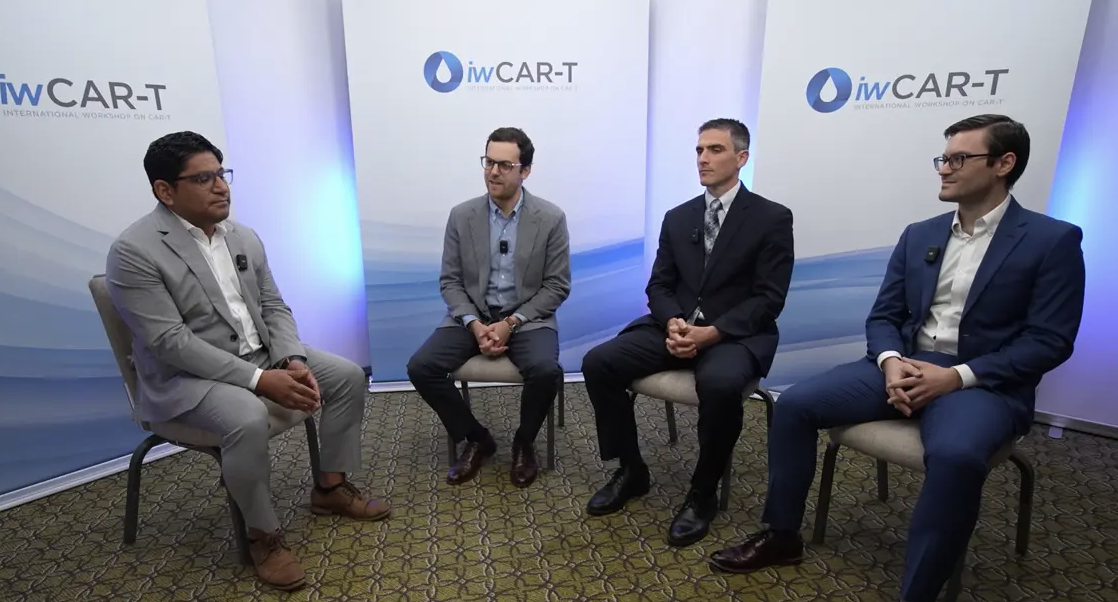
Evan Weber, PhD, University of Pennsylvania Perelman School of Medicine, Philadelphia, PA, discusses the current understanding of core regulators of CAR T-cell persistence and outlines his research in this area. Dr Weber notes that his team is analyzing biobanked patient CAR T-cells from early trials to identify features that endow cells with the ability to persist in the body, aiming to link biological features to patient outcomes. This interview took place at the EBMT-EHA 8th European CAR T-cell Meeting, held in Palma de Mallorca, Spain.
These works are owned by Magdalen Medical Publishing (MMP) and are protected by copyright laws and treaties around the world. All rights are reserved.
Transcript
I think core regulators of CAR-T persistence have started to be identified over the last five or so years. A lot of these studies originated with patient observations, so studying patient CAR T-cells before they’re infused into the body, and then doing correlative studies to understand what features of those patient CAR T-cells went on to persist and maintain durable anti-tumor activity in the patients who had durable responses versus those who had shorter responses...
I think core regulators of CAR-T persistence have started to be identified over the last five or so years. A lot of these studies originated with patient observations, so studying patient CAR T-cells before they’re infused into the body, and then doing correlative studies to understand what features of those patient CAR T-cells went on to persist and maintain durable anti-tumor activity in the patients who had durable responses versus those who had shorter responses. And I think what we have been able to identify are not just phenotypic features, but now actually central regulators of CAR T-cell persistence that include things like transcription factors and also major signaling hubs that can promote long-term survival.
So at the Children’s Hospital of Philadelphia, we have a very unique biobank in which we have patient CAR T-cells from the very first CAR T-cell trials in children with the CD19 CAR and we’re now pulling those samples out of our biobank and doing not just transcriptomics but also studying the epigenetics of these cells and other phenotypic features again to try to trace back what endowed those cells with the ability to persist in the body in some patients versus other patients who had much shorter persistence and antitumor responses. And what we’re finding is very interesting – it seems that a lot of the persistence that’s observed in the clinic can be traced back to T-cell intrinsic properties. Again, specific transcriptional pathways, signaling pathways. We’re learning more now about the epigenetics of these cells and whether certain signaling pathways or processes are primed based on the epigenetic landscape of certain CAR T-cell subsets before they’re infused into the body. So we think this is a very powerful platform to really link biological features to patient outcomes. And we hope over the next one to two years or so, we’ll be able to share some of that data with the field.
This transcript is AI-generated. While we strive for accuracy, please verify this copy with the video.
Read more...

Disclosures
Holds equity in Lyell Immunopharma; SAB for MedGene Therapeutics; Co-inventor on patents related to CAR T-cell therapy.