CAR-T Meeting 2026 | Investigating mechanisms negatively affecting CAR T-cell persistence: the potential role of the TME
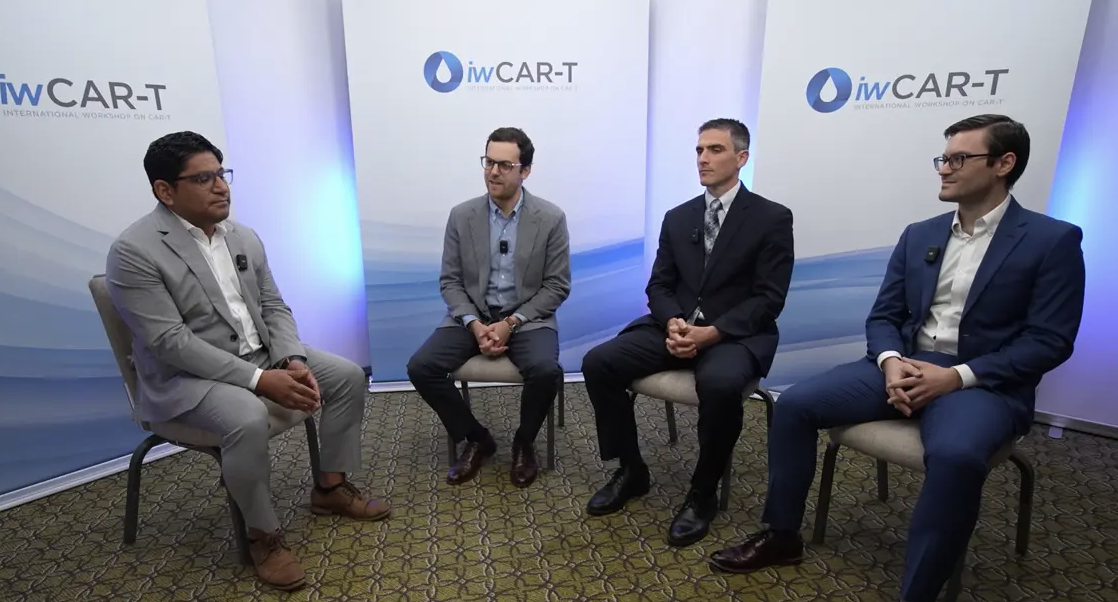
In this video, Evan Weber, PhD, University of Pennsylvania Perelman School of Medicine, Philadelphia, PA, briefly discusses mechanisms that may negatively affect CAR T-cell persistence. He highlights the potential role of the tumor microenvironment (TME), namely the presence of immunosuppressive macrophages and CAR-expressing T-regulatory cells, which may limit CAR T-cell-mediated killing and persistence. This interview took place at the EBMT-EHA 8th European CAR T-cell Meeting, held in Palma de Mallorca, Spain.
These works are owned by Magdalen Medical Publishing (MMP) and are protected by copyright laws and treaties around the world. All rights are reserved.
Transcript
I think not just our lab, but many others are starting to realize that it’s not just the T-cell that matters, it’s also the environment in which the T-cell is attempting to eradicate the tumor. And so I think emerging data suggests that certain cell subsets, such as immunosuppressive macrophages and potentially even CAR-expressing Tregs or T-regulatory cells in the tumor microenvironment can play an active role in not just limiting CAR T-cell killing, but also limiting CAR-T cell persistence...
I think not just our lab, but many others are starting to realize that it’s not just the T-cell that matters, it’s also the environment in which the T-cell is attempting to eradicate the tumor. And so I think emerging data suggests that certain cell subsets, such as immunosuppressive macrophages and potentially even CAR-expressing Tregs or T-regulatory cells in the tumor microenvironment can play an active role in not just limiting CAR T-cell killing, but also limiting CAR-T cell persistence. So I think those mechanisms and cell subsets, now that they’ve been identified to some extent, we can mechanistically interrogate them in the lab and then try to figure out good ways to counteract those mechanisms.
This transcript is AI-generated. While we strive for accuracy, please verify this copy with the video.
Read more...