The Lymphoma Channel is supported with funding from AstraZeneca (Diamond), Johnson & Johnson (Gold), Takeda (Silver) and Galapagos (Bronze).
VJHemOnc is an independent medical education platform. Supporters, including channel supporters, have no influence over the production of content. The levels of sponsorship listed are reflective of the amount of funding given to support the channel.
ASH 2025 | The expanding treatment options for R/R follicular lymphoma
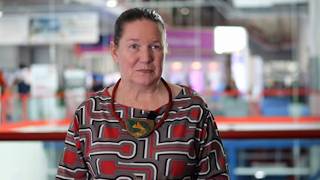
Mitchell Smith, MD, PhD, CMO of the Follicular Lymphoma Foundation, London, UK, discusses the expanding treatment options for relapsed/refractory (R/R) follicular lymphoma, including new bispecific antibodies, CAR T-cell therapies, and small molecules. Dr Smith highlights the need for shared decision making between patients and healthcare professionals, requiring education and consideration of individual patient circumstances. This interview took place at the 67th ASH Annual Meeting and Exposition, held in Orlando, FL.
These works are owned by Magdalen Medical Publishing (MMP) and are protected by copyright laws and treaties around the world. All rights are reserved.
Transcript
Yeah, we were pleased to co-sponsor a symposium on Friday on follicular lymphoma, new treatments for the relapsed/refractory setting, and our job was to bring the patient insights into that. Obviously, there’s a lot of exciting news during that symposium and over the few days of ASH. New bispecific antibodies, CAR T-cell therapies and small molecules. The number of new options for patients with relapsing refractory follicular lymphoma is expanding an amazing amount of information...
Yeah, we were pleased to co-sponsor a symposium on Friday on follicular lymphoma, new treatments for the relapsed/refractory setting, and our job was to bring the patient insights into that. Obviously, there’s a lot of exciting news during that symposium and over the few days of ASH. New bispecific antibodies, CAR T-cell therapies and small molecules. The number of new options for patients with relapsing refractory follicular lymphoma is expanding an amazing amount of information. Patients have a difficult time understanding all these options and knowing how to choose. And so there’s a key need for shared decision making, and that requires patients to be educated, and it requires the healthcare professional to be educated and to take into account the patient’s own needs at that time, which can change. It depends on their caregiver, how far they live from the center. So there’s a lot that goes into choosing the best of these expanding options for the patient at that time.
This transcript is AI-generated. While we strive for accuracy, please verify this copy with the video.
Read more...