The Non-Malignant Channel is supported with funding from Agios (Gold).
VJHemOnc is an independent medical education platform. Supporters, including channel supporters, have no influence over the production of content. The levels of sponsorship listed are reflective of the amount of funding given to support the channel.
ASH 2025 | Integrating palliative care in a comprehensive lifespan sickle cell center
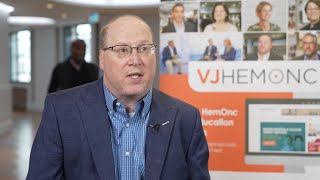
In this video, Crawford Strunk, MD, Cleveland Clinic, Cleveland, OH, discusses the integration of palliative care in a comprehensive lifespan sickle cell disease (SCD) center, highlighting its impact on inpatient length of stay. Dr Strunk notes that the implementation of a quality improvement project, which included both palliative care and hematology consultations, resulted in a significant reduction in length of stay for adult patients, from an average of 8-10 days to 3.2 days. This interview took place at the 67th ASH Annual Meeting and Exposition, held in Orlando, FL.
These works are owned by Magdalen Medical Publishing (MMP) and are protected by copyright laws and treaties around the world. All rights are reserved.
Transcript
Our study was looking at the integration of palliative care in our sickle cell medical neighborhood. Our sickle cell medical neighborhood is a comprehensive lifespan sickle cell program that includes subspecialists from both pediatric and adult providers. And initially, palliative care was not involved in the initial conversations. So in 2003, we actually started communication after they reached out to us to ask how they could help with our sickle cell disease patient management...
Our study was looking at the integration of palliative care in our sickle cell medical neighborhood. Our sickle cell medical neighborhood is a comprehensive lifespan sickle cell program that includes subspecialists from both pediatric and adult providers. And initially, palliative care was not involved in the initial conversations. So in 2003, we actually started communication after they reached out to us to ask how they could help with our sickle cell disease patient management. And after a preliminary conversation and working a little bit behind the scenes, we started a quality improvement project where we established a palliative care consult and a hematology consult with every new sickle cell disease, with every sickle cell admission on the adult side. And what we also wanted to do was look at whether integrating palliative care with the team would help lower the length of stay in our adult patients. We initially started with an average eight to 10 days of length of stay, and over the course of a year, we’re able to reduce that down to about 3.2 days median. And part of the way we did that was to make sure that patients had individualized care plans. We also integrated, as I said, a palliative care consult and a hematology consult. What we also did was strengthen our recommendations to the hospitalist team as well as provided care throughout the continuum so that our patients could follow up with us outpatient and really provide that wraparound service that our sickle cell patients need and deserve to maintain their health as well as they can be. What we were actually able to do was look at our last six months of data to show that what we’ve put in place has actually held, and so we’re still maintaining a length of stay between three and a half to five-ish days.
This transcript is AI-generated. While we strive for accuracy, please verify this copy with the video.
Read more...