The Community Focus Channel is supported with funding from Johnson & Johnson (Gold).
The Multiple Myeloma Channel is supported with funding from AbbVie (Platinum), Sanofi (Gold), Legend Biotech (Bronze), and through an educational grant from Alexion Pharma GmbH.
VJHemOnc is an independent medical education platform. Supporters, including channel supporters, have no influence over the production of content. The levels of sponsorship listed are reflective of the amount of funding given to support the channel.
ASH 2025 | Combined assessment of CTCs and MRD for dynamic risk assessment of patients with multiple myeloma
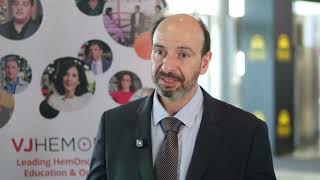
In this video, Bruno Paiva, PhD, University of Navarra, Pamplona, Spain, discusses the importance of combined assessment of circulating tumor cells (CTCs) and measurable residual disease (MRD) for dynamic risk assessment of patients with multiple myeloma (MM). This interview took place at the 67th ASH Annual Meeting and Exposition, held in Orlando, FL.
These works are owned by Magdalen Medical Publishing (MMP) and are protected by copyright laws and treaties around the world. All rights are reserved.
Transcript
We do know that CTCs and MRD are two rare populations that are respectively associated with disease dissemination and treatment resistance prior to relapse. That we knew, but what we don’t know is the genomic relationship between these two rare populations with these different pathogenic functions, as well as the independent prognostic value. So in this study, we tried to investigate, to define the genomic relationship as well as the independent prognostic value of CTCs and MRD...
We do know that CTCs and MRD are two rare populations that are respectively associated with disease dissemination and treatment resistance prior to relapse. That we knew, but what we don’t know is the genomic relationship between these two rare populations with these different pathogenic functions, as well as the independent prognostic value. So in this study, we tried to investigate, to define the genomic relationship as well as the independent prognostic value of CTCs and MRD.
On the genomic side, we found a 36% concordance in terms of genetic alterations, mutations, and copy number alterations between these two rare populations. So, relatively low concordance. And this may explain why they have a different pathogenic function, and it may also help explain why they have independent prognostic value. Because in this study, we did show based on a large data set collected by the European CTC Consortium, that CTC assessment and diagnosis and MRD assessment after treatment have independent prognostic value and are applicable and informative in transplant-eligible, ineligible patients, in any stage of the revised ISS. In fact, if patients have more than 0.02% CTCs at diagnosis and MRD after treatment, the median PFS will be approximately 2-3 years, regardless of a revised ISS 1, 2, or 3. And importantly, we also showed how MRD-negative patients having more than 0.02% CTCs at diagnosis have a median PFS that is more similar to MRD-positive than MRD-negative patients. And I think this is an important finding now that treatment decisions are being made among MRD-negative patients. We need to consider the CTC levels at diagnosis among these patients before treatment decisions.
This transcript is AI-generated. While we strive for accuracy, please verify this copy with the video.
Read more...