The Lymphoma Channel is supported with funding from AstraZeneca (Diamond), BMS (Gold), Johnson & Johnson (Gold), Takeda (Silver) and Galapagos (Bronze).
VJHemOnc is an independent medical education platform. Supporters, including channel supporters, have no influence over the production of content. The levels of sponsorship listed are reflective of the amount of funding given to support the channel.
SOHO Italy 2025 | The challenges associated with developing CAR-T products for T-cell malignancies
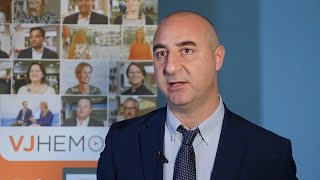
Massimiliano Mazza, PhD, IRCCS Istituto Romagnolo per lo Studio dei Tumori (IRST), Meldola, Italy, comments on the challenges of developing successful CAR-T products for T-cell malignancies. He mentions the need to overcome limitations such as the lack of specific T-cell targets, fratricide killing, and the risk of transducing tumor cells, which can lead to CAR-T resistance. This interview took place at the SOHO Italy Annual Conference 2025 in Rome, Italy.
These works are owned by Magdalen Medical Publishing (MMP) and are protected by copyright laws and treaties around the world. All rights are reserved.
Transcript
T-cell malignancies are peculiar for CAR-T therapies because, of course, the cell of origin for the malignancy is the same as the source for the therapy. So there are a series of challenges that need to be overcome in order to implement this type of therapies. First of all, one limitation is the lack of a malignant T-cell specific target, which means that if we develop CAR against common surface markers, we are going to have a targeting also of the healthy T-cells...
T-cell malignancies are peculiar for CAR-T therapies because, of course, the cell of origin for the malignancy is the same as the source for the therapy. So there are a series of challenges that need to be overcome in order to implement this type of therapies. First of all, one limitation is the lack of a malignant T-cell specific target, which means that if we develop CAR against common surface markers, we are going to have a targeting also of the healthy T-cells. But on top of that is also that the CAR T-cells will undergo suicide. We will have what is called the fratricide killing between transduced cells. And moreover, while transient B-cell aplasia is acceptable for CAR-T therapies, tackling B cell lymphoma and diffuse large B cell lymphoma, severe T-cell deficiency leads to infection complications like viral reactivation, pneumonia, and others. So it can be very harmful if it’s not properly controlled. There are strategies that are trying to overcome that, but it’s very difficult to find the proper balance between the benefit and the toxicities in this field. Engineered CAR T-cells against self-antigens, as I said, undergo fratricide killing. And moreover, when you produce CAR T-cells, you run into the risk of transducing also tumor cells. And this holds a potential for CAR-T resistance, which has to be taken into account. Therefore, the manufacturing conditions where we pre-select TCR beta 2 need to be very well controlled in order to have a very, very low amount of contamination by TRBC1 positive cells. I think those are the main challenges in this field and specifically for CAR T-cells. Of course, the use of allogenic therapies or in vivo CAR-T could overcome some of these challenges. However, we will always remember that we are talking about heavily pretreated patients. So the fitness of the T-cell may be an issue.
This transcript is AI-generated. While we strive for accuracy, please verify this copy with the video.
Read more...