The Chronic Lymphocytic Leukemia Channel is supported with funding from AstraZeneca (Diamond), Johnson & Johnson (Gold) and Lilly (Silver).
The Community Focus Channel is supported with funding from Johnson & Johnson (Gold).
VJHemOnc is an independent medical education platform. Supporters, including channel supporters, have no influence over the production of content. The levels of sponsorship listed are reflective of the amount of funding given to support the channel.
EHA 2026 | Factoring quality of life into treatment decisions for patients with CLL
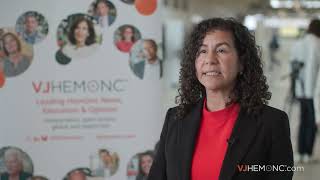
Dima El-Sharkawi, MB, BS, MA, PhD, MRCP, FRCPath, The Royal Marsden NHS Foundation Trust, London, UK, briefly discusses the importance of considering quality of life when choosing treatments for chronic lymphocytic leukemia (CLL), highlighting the potential benefits of moving from continuous therapies to fixed-duration treatments to reduce cumulative toxicities. This interview took place at the 31st Congress of the European Hematology Association (EHA) in Stockholm, Sweden.
These works are owned by Magdalen Medical Publishing (MMP) and are protected by copyright laws and treaties around the world. All rights are reserved.
Transcript
I think quality of life is really, really important when we choose our treatments. We’ll discuss the potential treatment options with our patients because not only do we want our patients to live longer with their disease, but we want them to live good lives with their disease. So I think as patients are living longer, trying to move from continuous therapies to fixed-duration treatments, not just in the frontline setting, but also in the relapsed/refractory setting will hopefully help to reduce some of the cumulative toxicities we may otherwise see...
I think quality of life is really, really important when we choose our treatments. We’ll discuss the potential treatment options with our patients because not only do we want our patients to live longer with their disease, but we want them to live good lives with their disease. So I think as patients are living longer, trying to move from continuous therapies to fixed-duration treatments, not just in the frontline setting, but also in the relapsed/refractory setting will hopefully help to reduce some of the cumulative toxicities we may otherwise see.
This transcript is AI-generated. While we strive for accuracy, please verify this copy with the video.
Read more...