The Community Focus Channel is supported with funding from Johnson & Johnson (Gold).
VJHemOnc is an independent medical education platform. Supporters, including channel supporters, have no influence over the production of content. The levels of sponsorship listed are reflective of the amount of funding given to support the channel.
SOHO 2026 | Early referral to specialist academic centers remains key in acute and chronic GvHD management
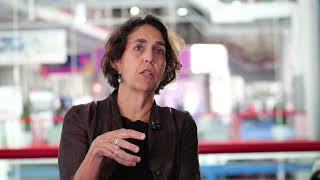
Iskra Pusic, MD, MSCI, Washington University School of Medicine, St. Louis, MO, discusses the management of acute and chronic graft-versus-host disease (GvHD) following allogeneic stem cell transplantation (alloSCT), emphasizing the importance of early referral to specialist academic centers for access to therapies and expert toxicity management. This interview took place at the 14th Annual Meeting of the Society of Hematologic Oncology (SOHO 2026) in Houston, TX.
These works are owned by Magdalen Medical Publishing (MMP) and are protected by copyright laws and treaties around the world. All rights are reserved.
Transcript
The main advice for community physicians is to refer such patients early to major clinical centers. I think it’s really important to kind of evaluate these patients early on in their treatment so they can get appropriate therapies. I think that a lot of these therapies, you know, are kind of complicated and some of them might not be available in smaller community hospitals or practices. So I think that at this point in time, I think it’s important that these patients are evaluated at large academic centers with their specialists, particularly for those diseases...
The main advice for community physicians is to refer such patients early to major clinical centers. I think it’s really important to kind of evaluate these patients early on in their treatment so they can get appropriate therapies. I think that a lot of these therapies, you know, are kind of complicated and some of them might not be available in smaller community hospitals or practices. So I think that at this point in time, I think it’s important that these patients are evaluated at large academic centers with their specialists, particularly for those diseases. As time goes and as those treatments become more refined, there might be possible to give them some clue. It might be possible to give them orally. And as we know more, hopefully we will be able to bring it back to community practices but for now many of these therapies can also have very specific toxicities so are kind of tied to large academic centers
This transcript is AI-generated. While we strive for accuracy, please verify this copy with the video.
Read more...