EHA 2025 | The key unmet needs in the management of cellular therapy-related toxicities
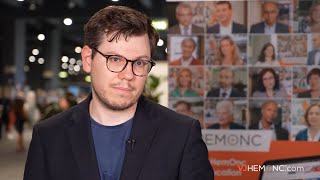
In this video, Kai Rejeski, MD, Ludwig Maximilian University of Munich, Munich, Germany, discusses the most pressing unmet needs in the management of cellular therapy-related toxicities. Dr Rejeski highlights two key areas: infectious complications, which account for over 50% of non-relapse-related deaths after CAR T-cell therapy, and novel non-ICANS neurologic toxicities (NINTs) associated with BCMA-directed CAR T-cell therapy. This interview took place at the 30th Congress of the European Hematology Association (EHA) in Milan, Italy.
These works are owned by Magdalen Medical Publishing (MMP) and are protected by copyright laws and treaties around the world. All rights are reserved.
Transcript
I’d like to focus on two areas. The first area I think relates to infectious complications. So I think in a large meta-analysis that we published last year, we really highlighted that infectious complications are actually the main driver of non-relapse mortality after CAR T-cell therapy. It’s not CRS, it’s not ICANS, it’s actually infectious complications...
I’d like to focus on two areas. The first area I think relates to infectious complications. So I think in a large meta-analysis that we published last year, we really highlighted that infectious complications are actually the main driver of non-relapse mortality after CAR T-cell therapy. It’s not CRS, it’s not ICANS, it’s actually infectious complications. They account for more than 50% of all non-relapse related deaths. So that’s a major issue. And I think we need to do a better job at reporting infections, describing them in terms of their timing, their overall clinical severity, and then also thinking about mitigation strategies. How do we do a better job at not only identifying infectious complications, but actually preventing them? And I think that’s an area where I’d like to see similar developments as we’ve seen for CRS and ICANS in the last years.
The second area I think that is an area of high interest in regards to CAR T-cell-related toxicities is these novel, what we call non-ICANS neurologic toxicities, or NINTs. These arise with BCMA-directed CAR T-cell therapy, and they’re not completely well understood in terms of patho-mechanism. I think that we can still do a better job at understanding which patients develop this specific side effect of particularly ciltacabtagene autoleucel CAR T-celltherapy. There’s actually some interesting data that’s being presented here at this year’s EHA, perhaps thinking about the use of absolute lymphocyte count as an early biomarker that we can use to perhaps guide anti-inflammatory treatment of this important toxicity. I think those are the two areas where I see a pressing need in terms of doing a better job at recognizing the toxicity, developing specific grading systems, and then, based on that, developing new treatment recommendations that ultimately help our CAR T-cell patients in Europe and abroad.
This transcript is AI-generated. While we strive for accuracy, please verify this copy with the video.
Read more...