The Chronic Lymphocytic Leukemia Channel is supported with funding from AstraZeneca (Diamond), AbbVie (Platinum), BeOne Medicines (Silver) and Lilly (Silver).
The Lymphoma Channel is supported with funding from AstraZeneca (Diamond), BMS (Gold), Johnson & Johnson (Gold), Takeda (Silver) and Galapagos (Bronze).
VJHemOnc is an independent medical education platform. Supporters, including channel supporters, have no influence over the production of content. The levels of sponsorship listed are reflective of the amount of funding given to support the channel.
ASH 2016 | PHILEMON: a step closer to using MRD to guide treatment decisions in mantle cell lymphoma (MCL)?
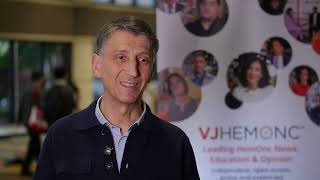
Carsten Niemann, MD, PhD, from the Rigshospitalet, Copenhagen, Denmark, introduces the Phase II PHILEMON trial (NCT02460276) of ibrutinib, lenalidomide and rituximab for frail patients with relapsed/refractory mantle cell lymphoma (MCL) at the American Society of Hematology (ASH) Congress 2016 in San Diego, CA. He explains that he has been responsible for minimal residual disease (MRD) testing in this trial, and highlight that currently treatment decisions are not being guided based on MRD levels, but that this trial may be a step closer to this. He argues that the next step should be using MRD testing to decide whether treatment should be stopped or re-initiated. A trial of this is being planned in chronic lymphoblastic leukemia (CLL), where MRD negative patients will be randomized to stop or continue treatment to determine whether they can be kept progression free. Treatment will be re-initiated in patients who become MRD positive with the aim to induce remission. He highlights that this increase of time in which patients are disease-free represents a benefit for both patients and economically.