The Acute Myeloid Leukemia Channel is supported with funding from BMS (Silver), and through an educational grant from Jazz Pharmaceuticals.
VJHemOnc is an independent medical education platform. Supporters, including channel supporters, have no influence over the production of content. The levels of sponsorship listed are reflective of the amount of funding given to support the channel.
ASH 2024 | The KOMET-007 trial: investigating combinations with ziftomenib in newly diagnosed and R/R AML
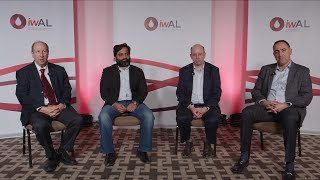
Amir Fathi, MD, MPH, Massachusetts General Hospital, Boston, MA, comments on the promising results of the KOMET-007 trial, a Phase I study evaluating the combination of ziftomenib with induction chemotherapy 7 plus 3 in newly diagnosed patients with acute myeloid leukemia (AML). Dr Fathi also highlights the second aspect of the trial, which involved combining ziftomenib with azacitidine and venetoclax in older patients with relapsed/refractory disease. This interview took place at the 66th ASH Annual Meeting and Exposition, held in San Diego, CA.
These works are owned by Magdalen Medical Publishing (MMP) and are protected by copyright laws and treaties around the world. All rights are reserved.
Transcript (AI-generated)
There were two aspects of the KOMET-007 trial that were presented at this year’s meeting. The first was at the oral session presented by Dr Zeidan. I happen to be the senior author on that particular oral presentation that covered patients with NPM1 or KMT2A alterations who were newly diagnosed with AML, receiving the combination of induction chemotherapy 7 plus 3 with the menin inhibitor, ziftomenib...
There were two aspects of the KOMET-007 trial that were presented at this year’s meeting. The first was at the oral session presented by Dr Zeidan. I happen to be the senior author on that particular oral presentation that covered patients with NPM1 or KMT2A alterations who were newly diagnosed with AML, receiving the combination of induction chemotherapy 7 plus 3 with the menin inhibitor, ziftomenib. So newly diagnosed patients. The data was quite promising. A very, very high rate of complete remission was seen in NPM1-mutated patients. In fact, 100% of the 20 or so patients had a complete remission, which is remarkable, albeit it’s a relatively small number of patients. And a high number of patients with KMT2A alterations also had complete remission. So it was quite a remarkable set of results from the Phase I dose-finding study for that particular combination. We will see ultimately where that goes. The hope is that we will be able to do larger Phase III studies to compare 7+3 and ziftomenib versus a placebo-controlled arm to see if there is superiority in the NPM1 mutated and KMT2A rearranged group. The other aspect of the KOMET-007 trial was the combination of ziftomenib with HMA or azacitidine and venetoclax in older patients. But this study was conducted in the relapsed/refractory setting. So it was a more heterogeneous patient population. We found that the combination was well tolerated at multiple dose levels that we studied, all the way up to 600 milligrams of ziftomenib daily, given with azacitidine and venetoclax. The composite remission rate was around 50% for NPM1. It was lower for KMT2A, but both populations of patients responded, including patients who had previously received venetoclax, which is a particularly high-risk and therapeutically resistant patient population.
This transcript is AI-generated. While we strive for accuracy, please verify this copy with the video.
Read more...

Disclosures
Menarini Group: Consultancy; Foghorn, Blueprint Medicines, Kura, Trillium: Honoraria; Agios: Ended employment in the past 24 months; Bristol Myers Squibb: Consultancy, Research Funding; AstraZeneca: Honoraria; MorphoSys: Consultancy; Kite: Consultancy; PureTech: Consultancy; Daiichi Sankyo: Consultancy; Pfizer: Consultancy; ImmunoGen: Consultancy; Mablytics: Consultancy; Ipsen: Consultancy; Abbvie: Consultancy, Research Funding; Takeda: Consultancy; Genentech: Honoraria; Forma: Consultancy; AbbVie, BMS/Celgene, and Agios/Servier: Research Funding; EnClear: Consultancy; Astellas: Consultancy; Remix: Consultancy; Ispen: Consultancy; Rigel: Consultancy; Autolus: Consultancy; BMS/Celgene: Consultancy; Amgen: Consultancy; Gilead: Consultancy; Servier: Consultancy, Research Funding; Orum: Consultancy; Novartis: Consultancy.