Tandem Meetings 2026 | A pilot study of bortezomib plus PTCy as GvHD prophylaxis in patients undergoing haplo-SCT
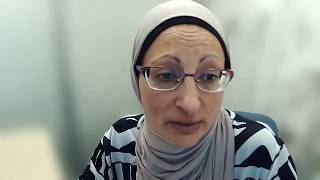
In this video, Shatha Farhan, MD, Henry Ford Health, Detroit, MI, discusses a pilot study (NCT03850366) evaluating the addition of bortezomib to post-transplant cyclophosphamide (PTCy) for graft-versus-host disease (GvHD) prophylaxis and highlights the potential of this combination to improve outcomes in patients receiving a peripheral blood haploidentical (haplo) stem cell transplant (SCT). This interview took place virtually.
These works are owned by Magdalen Medical Publishing (MMP) and are protected by copyright laws and treaties around the world. All rights are reserved.
Transcript
Also related to GVHD prophylaxis, also related to how we can improve the outcome of the PTCy, hopefully in the future to be able to lower the doses, what’s the best combination. So bortezomib has immunomodulatory and has inhibitory effects on dendritic cells and on T-cells, especially allo-reactive T-cells. There’s some studies done that’s important, not only the bortezomib dosing, but also when it’s given...
Also related to GVHD prophylaxis, also related to how we can improve the outcome of the PTCy, hopefully in the future to be able to lower the doses, what’s the best combination. So bortezomib has immunomodulatory and has inhibitory effects on dendritic cells and on T-cells, especially allo-reactive T-cells. There’s some studies done that’s important, not only the bortezomib dosing, but also when it’s given. Like if it’s given late, it can actually cause more toxicity, especially intestinal toxicity. These are mice studies. So what we did, this is a single-center open-label pilot study. We dosed PTCy, the usual dosing, plus bortezomib, 1.3 mg per meter squared on day one, plus one, plus four, plus seven, with the usual tacrolimus and MMF. So far, we have nine patients. This is in haplo-transplant, peripheral blood. So haplo-transplant, peripheral blood. And then so far, we have a grade 2 to 4 acute GVHD only in one patient, a moderate chronic GVHD, one patient. And none of the patients are on any immunosuppressive medication so far. We had two deaths, one relapsed because the patient had a persistent disease even before the transplant and one related to fungal infection. But otherwise, all patients did so well with good immune recovery, no major relation to like graft failure or anything like that. And this is still an ongoing study too. Of course, more data to come.
This transcript is AI-generated. While we strive for accuracy, please verify this copy with the video.
Read more...