The Non-Malignant Channel is supported with funding from Agios (Gold).
The Sickle Cell Disease Channel is supported with funding from Agios (Gold).
VJHemOnc is an independent medical education platform. Supporters, including channel supporters, have no influence over the production of content. The levels of sponsorship listed are reflective of the amount of funding given to support the channel.
ASH 2025 | Expanding access to gene therapy for patients with sickle cell disease
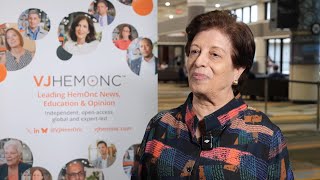
Sunil Gupta, MD, FRCP, FRCPath, MBA, Lewisham and Greenwich NHS Trust, London, UK, discusses the current state of sickle cell disease (SCD) treatment in the UK, highlighting the need for increased accessibility to gene therapy, He emphasizes the importance of fast-tracking patients with SCD for gene therapy, considering their poor quality of life and potential for organ damage. This interview took place at the 67th ASH Annual Meeting and Exposition, held in Orlando, FL.
These works are owned by Magdalen Medical Publishing (MMP) and are protected by copyright laws and treaties around the world. All rights are reserved.
Transcript
Sickle cell is something which unfortunately lagged behind again. We had lovely three drugs or two approved drugs so to say the third drug was not approved in the UK. Two drugs which were approved but then withdrawn unfortunately and at the moment of course we have the gene therapy. The gene therapy is very expensive and it is again happening in very concentrated centers, which I totally agree and fine with that...
Sickle cell is something which unfortunately lagged behind again. We had lovely three drugs or two approved drugs so to say the third drug was not approved in the UK. Two drugs which were approved but then withdrawn unfortunately and at the moment of course we have the gene therapy. The gene therapy is very expensive and it is again happening in very concentrated centers, which I totally agree and fine with that. But I think what we might need to do is that we need to make it more accessible and we need to fast track these patients. I have got so many patients in our center who are suffering in a big way from sickle cell anemia and gene therapy should be made accessible to these patients much quicker and you might have relaxed the qualifying criteria for these patients because as you can imagine that these patients’ quality of life is quite poor and of course their organ damage will happen more and more as they actually wait longer for the gene therapy so that is my anticipation and expectation again in this area we have, we are making fantastic progress in other rare diseases like hemophilia and thalassemia or sickle cell anemia, we are the second largest center in the country and gene therapy needs to come thick and fast to these patients so that they can be benefited with the new advances in science. This is the most happening time for hematology in the last 10 years and we have seen massive progress and that is good for science, that is good for patients.
This transcript is AI-generated. While we strive for accuracy, please verify this copy with the video.
Read more...