The Community Focus Channel is supported with funding from Johnson & Johnson (Gold).
The Non-Malignant Channel is supported with funding from Agios (Gold).
The Thalassemia Channel is supported with funding from Agios (Gold).
VJHemOnc is an independent medical education platform. Supporters, including channel supporters, have no influence over the production of content. The levels of sponsorship listed are reflective of the amount of funding given to support the channel.
ASCAT 2024 | The cardiac rhythm in thalassemia: increased incidence of atrial fibrillation and stroke
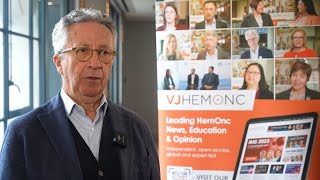
In this video, Malcolm Walker, MD, FRCP, University College London, London, UK, discusses heart rhythm disorders, specifically atrial fibrillation (AF), in patients with thalassemia, highlighting the increased risk of stroke in patients with thalassemia and AF. This interview took place at the 19th Annual Scientific Conference of the Academy for Sickle Cell and Thalassaemia (ASCAT 2024) in London, UK.
These works are owned by Magdalen Medical Publishing (MMP) and are protected by copyright laws and treaties around the world. All rights are reserved.
Transcript
Heart rhythm disorders are common amongst all populations, but the thalassemic population have a very specific high incidence. So as our success is better at allowing people to survive with thalassemia and they reach middle and older ages, what we found, a particular rhythm disorder called atrial fibrillation or AF for short, becomes very prevalent. So in our experience, it may be up to 40% of the over 40-year-olds that may get episodes of atrial fibrillation...
Heart rhythm disorders are common amongst all populations, but the thalassemic population have a very specific high incidence. So as our success is better at allowing people to survive with thalassemia and they reach middle and older ages, what we found, a particular rhythm disorder called atrial fibrillation or AF for short, becomes very prevalent. So in our experience, it may be up to 40% of the over 40-year-olds that may get episodes of atrial fibrillation. Now, although they’re uncomfortable, they’re not immediately life-threatening, usually, but they carry the risk of stroke. And it’s one of the preventable causes of stroke, both in the general population, but very importantly in the thalassemic population, because their blood is stickier. And if you have the combination of atrial fibrillation and sticky blood, it’s a sort of perfect storm and strokes are prevalent, and we do see, and because these are a relatively young population, strokes are devastating. So anything that we can do to prevent them, we try. So if you identify atrial fibrillation, you prevent stroke by giving them proper anticoagulation to make the blood less sticky.
Read more...