The Chronic Lymphocytic Leukemia Channel is supported with funding from AstraZeneca (Diamond), AbbVie (Platinum), BeOne Medicines (Silver) and Lilly (Silver).
VJHemOnc is an independent medical education platform. Supporters, including channel supporters, have no influence over the production of content. The levels of sponsorship listed are reflective of the amount of funding given to support the channel.
ASH 2024 | Developing open-source algorithms to improve outcomes for patients with hematological malignancies
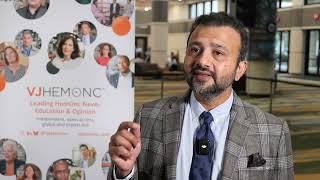
In this interview, Carsten Niemann, MD, PhD, Copenhagen University Hospital, Copenhagen, Denmark, comments on the potential of using data-driven medical science to improve outcomes for patients with chronic lymphocytic leukemia (CLL) and other hematological malignancies. The development of open-source algorithms that can be used to identify patterns in large datasets will allow for personalized treatment decisions to be made to improve patient care. This interview took place at the 66th ASH Annual Meeting and Exposition, held in San Diego, CA.
These works are owned by Magdalen Medical Publishing (MMP) and are protected by copyright laws and treaties around the world. All rights are reserved.
Transcript (AI-generated)
So working half-time as a clinician, half-time as a research leader, obviously the aim for my research is to improve outcomes for our patients with CLL and other hematological malignancies. And in Denmark we are lucky to have a very good resource in terms of access to health data and we have collected a cohort of the Danish lymphoid cancer research cohort of more than 65,000 patients with different types of lymphoma, CLL and multiple myeloma...
So working half-time as a clinician, half-time as a research leader, obviously the aim for my research is to improve outcomes for our patients with CLL and other hematological malignancies. And in Denmark we are lucky to have a very good resource in terms of access to health data and we have collected a cohort of the Danish lymphoid cancer research cohort of more than 65,000 patients with different types of lymphoma, CLL and multiple myeloma. Why do we do that? We want to be able to use all the routine data assembled on our patients for pattern recognition because as physicians we cannot keep an overview of more than 3,000 different variables and we have no way to combine that with genetic and functional characterization of samples from the patients. So we need what I consider pattern recognition to improve data-driven medical science. That can be to alert a physician about a patient who would actually have a very low risk of ever needing treatment for CLL and make it a shared decision between the physician and the patient whether that patient would need to come in for clinic visits, could be managed by a questionnaire sent electronically and maybe blood samples once a year or even in specialized follow-up. But it could also be identifying patients at the time of treatment need to predict whether they have a higher risk of adverse events. It could be cardiac events. It could be infections upon a specific treatment, but not on another treatment. So this is essentially taking the next step using all the health data we have available to guide the treatment of individual patients.
Doing that we have seen some failures during the last years with commercial algorithms that were trained at one hospital, but failed when implemented at another hospital. What we do is trying to make open-source algorithms that we can provide access to for other hospitals, and that way facilitate the implementation and monitoring of these algorithms in different environments. So that’s to mention the caveats in terms of using medical AI, that we need to make sure we monitor as thoroughly as we do in clinical trials, the performance of these algorithms to actually truly improve treatment for our patients.
This transcript is AI-generated. While we strive for accuracy, please verify this copy with the video.
Read more...

Disclosures
CSL Behring, Genmab, Takeda, Beigene, MSD, Lilly: Consultancy; Novo Nordisk: Research Funding; AbbVie, Janssen, AstraZeneca, Novo Nordisk Foundation, Octapharma: Consultancy, Research Funding.