The Community Focus Channel is supported with funding from Johnson & Johnson (Gold).
VJHemOnc is an independent medical education platform. Supporters, including channel supporters, have no influence over the production of content. The levels of sponsorship listed are reflective of the amount of funding given to support the channel.
General Updates | Barriers community oncologists may face when implementing ASH guidelines in older patients with AML
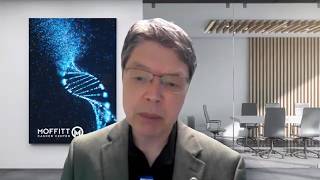
Jeffrey Lancet, MD, Moffitt Cancer Center, Tampa, FL, discusses the challenges community oncologists may encounter when implementing the updated American Society of Hematology (ASH) guidelines for the management of older patients with newly diagnosed acute myeloid leukemia (AML). Dr Lancet highlights that barriers may be both resource-based and experience-based, emphasizing the importance of developing a partnership between community and academic oncologists to achieve the best outcomes for patients. This interview took place virtually.
These works are owned by Magdalen Medical Publishing (MMP) and are protected by copyright laws and treaties around the world. All rights are reserved.
Transcript
I think that some of the barriers include resources for patients to receive recommended treatments because many times these types of therapies that are being recommended through the guidelines do require frequent visits to the community oncologist’s office, the ability to kind of follow through on detailed treatment plans, supportive care recommendations that need to be followed for the purposes of fending off infection and managing transfusions...
I think that some of the barriers include resources for patients to receive recommended treatments because many times these types of therapies that are being recommended through the guidelines do require frequent visits to the community oncologist’s office, the ability to kind of follow through on detailed treatment plans, supportive care recommendations that need to be followed for the purposes of fending off infection and managing transfusions. So having enough support in the community can be a challenge, especially for patients that live in rural or underserved areas where there may be distance barriers to these types of care programs.
I also feel that other barriers include some of the intensity of therapeutic modalities that go into in even low-intensity therapies. So, again these are treatments that result in, even lower-intensity therapies, in a high degree of severe cytopenias and risk of infection and you really need to stay on top of these patients to manage them appropriately. There’s a frequent need for dose reduction or treatment interruption and, you know, sometimes less experienced community oncologists may have difficulty in managing these diseases that they may not see quite as often. So I think the barriers are both resource-based, but also perhaps experience-based with these rare diseases. And it’s really critical to maintain close connection with an academic center to help provide guidance for the care of these patients and really to understand when treatment needs to be changed, when treatment may need to be interrupted, when a change in therapy may be necessary altogether in order to achieve the best outcomes for these patients. So it’s really a partnership that we need to emphasize between the community oncologists and the academic oncologists to ensure the best outcomes for these patients that are being treated in the community.
This transcript is AI-generated. While we strive for accuracy, please verify this copy with the video.
Read more...