EHA 2026 | Future directions in ALL: targeted therapies and chemotherapy-free approaches
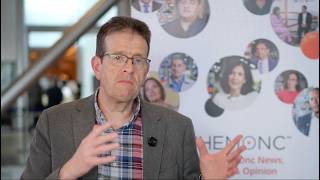
Anthony Moorman, PhD, Newcastle University, Newcastle, UK, discusses future directions in acute lymphoblastic leukemia (ALL) treatment and research, highlighting the growing impact of blinatumomab and the shift toward increasingly targeted, potentially chemotherapy-free approaches in B-cell ALL. Prof. Moorman also addresses ongoing challenges in T-ALL, including the need for improved frontline risk stratification using measurable residual disease (MRD), methylation profiling, and genomic risk models to help prevent relapse and improve long-term outcomes. This interview took place at the 31st Congress of the European Hematology Association (EHA) in Stockholm, Sweden.
These works are owned by Magdalen Medical Publishing (MMP) and are protected by copyright laws and treaties around the world. All rights are reserved.
Transcript
So, in B-cell acute lymphoblastic leukemia, it’s undoubtedly going to be blinatumomab. It’s changing the way everyone thinks about treating B-cell acute lymphoblastic leukemia. People are even starting to talk about chemotherapy-free regimes, which is something that, you know, even 10 years ago just wouldn’t have, you know, entered into the discussion. But we still need to learn a lot about blinatumomab...
So, in B-cell acute lymphoblastic leukemia, it’s undoubtedly going to be blinatumomab. It’s changing the way everyone thinks about treating B-cell acute lymphoblastic leukemia. People are even starting to talk about chemotherapy-free regimes, which is something that, you know, even 10 years ago just wouldn’t have, you know, entered into the discussion. But we still need to learn a lot about blinatumomab. We don’t know what the optimal number of cycles are. We don’t know the amount of chemotherapy that needs to go alongside blinatumomab therapy. And also, we don’t know what the blinatumomab specific risk factors are. We were presenting a paper yesterday with one of my colleagues showing that the spectrum of risk factors in the blinatumomab area is very likely to be quite different, specifically the genetic ones. So we’re still going to need that comprehensive genomic profiling in order to understand exactly which of those risk factors are going to be relevant in the blinatumomab area. In T-ALL, I think obviously we don’t have blinatumomab or an equivalent in T-ALL. So there, the immediate advances are, I think, going to come from appropriate risk stratification. At the moment, aside from MRD, there are very few really solid risk stratification tools that we have. And even in MRD, there isn’t kind of worldwide consensus about what’s the most optimal time point, what’s the best threshold. So there, I think the biggest advance is going to be introducing risk profiles either based on the methylation profile which is something novel which has been taken forward particularly by the NOFO group and researchers here in Sweden and also or a gene mutation profile that has been proposed by several French groups. So I think they’re the two things that offer real possibilities to risk stratify T-ALL frontline. And I think that’s going to be very important because in T-ALL, although the outcomes are lower than in B-cell ALL, they’re still not terrible. But patients with T-ALL who relapse have a very poor outcome after relapse. So averting that frontline, that initial relapse, is much more important in T-ALL than it is in B-cell ALL. So that’s going to be, I think, the key thing that’s going to happen over the next few years.
This transcript is AI-generated. While we strive for accuracy, please verify this copy with the video.
Read more...