The Acute Myeloid Leukemia Channel is supported with funding from BMS (Silver), and through an educational grant from Jazz Pharmaceuticals.
The Myelodysplastic Syndromes Channel is supported with funding from Geron (Silver).
VJHemOnc is an independent medical education platform. Supporters, including channel supporters, have no influence over the production of content. The levels of sponsorship listed are reflective of the amount of funding given to support the channel.
ASH 2025 | Complex cytogenetics in myeloid malignancies: redefining complex karyotypes
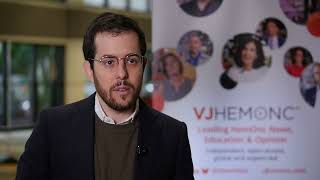
Alex Bataller, MD, PhD, The University of Texas MD Anderson Cancer Center, Houston, TX, shares insights into a retrospective analysis exploring complex karyotypes in patients with myelodysplastic syndromes (MDS) and acute myeloid leukemia (AML). This analysis aims to identify trends and vulnerabilities to better inform treatment design. This interview took place at the 67th ASH Annual Meeting and Exposition, held in Orlando, FL.
These works are owned by Magdalen Medical Publishing (MMP) and are protected by copyright laws and treaties around the world. All rights are reserved.
Transcript
This abstract basically was analyzing the complexity of karyotypes in patients with MDS and AML with complex karyotypes. So basically what we looked at is all the cytogenetic abnormalities that these patients have and try to find if there’s any trend, if there’s like any chromosomes that are more affected, less affected, if there’s any association, try to find the vulnerabilities of this disease to try to better design treatments, better design drugs to cure these diseases...
This abstract basically was analyzing the complexity of karyotypes in patients with MDS and AML with complex karyotypes. So basically what we looked at is all the cytogenetic abnormalities that these patients have and try to find if there’s any trend, if there’s like any chromosomes that are more affected, less affected, if there’s any association, try to find the vulnerabilities of this disease to try to better design treatments, better design drugs to cure these diseases. We know that patients with complex karyotype usually have TP53 mutation, usually have very huge genetic instability. So if we want to find out drugs to target these diseases, we really need to understand what’s happening there. So this abstract, it’s retrospective. We are looking at patients that were in different clinical trials, different treatments, but we were curious to see what is the landscape of their cytogenetic and molecular abnormalities and try to find out patterns, something to better understand this disease.
This transcript is AI-generated. While we strive for accuracy, please verify this copy with the video.
Read more...