The Lymphoma Channel is supported with funding from AstraZeneca (Diamond), Johnson & Johnson (Gold), Takeda (Silver) and Galapagos (Bronze).
VJHemOnc is an independent medical education platform. Supporters, including channel supporters, have no influence over the production of content. The levels of sponsorship listed are reflective of the amount of funding given to support the channel.
ASH 2025 | Long-term follow-up results of Mosun-Pola versus R-Pola in patients with R/R LBCL
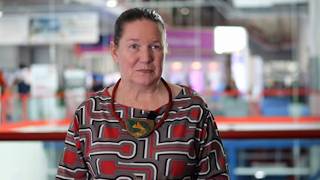
Nilanjan Ghosh, MD, PhD, Levine Cancer Institute, Charlotte, NC, presents the results from the long-term follow-up of a Phase Ib/II study (NCT03671018) comparing subcutaneous mosunetuzumab (Mosun) in combination with polatuzumab vedotin (Pola) to rituximab (R) plus Pola in patients with relapsed/refractory (R/R) large B-cell lymphoma (LBCL). Dr Ghosh highlights that Mosun-Pola, a fixed-duration therapy administered in the outpatient setting, continues to demonstrate clinically meaningful and sustained improvements across all efficacy endpoints compared with R-Pola, with no new safety signals reported. This interview took place at the 67th ASH Annual Meeting and Exposition, held in Orlando, FL.
These works are owned by Magdalen Medical Publishing (MMP) and are protected by copyright laws and treaties around the world. All rights are reserved.
Transcript
It was a pleasure to present the results of the GO40516 study with the randomized cohort of mosunetuzumab plus polatuzumab, where mosunetuzumab is given subcutaneously compared to rituximab-polatuzumab, in patients with relapsed/refractory large B-cell lymphoma. In this study, mosunetuzumab was given for a fixed duration of eight cycles with subcutaneous dosing, and polatuzumab was given for six cycles with standard dosing...
It was a pleasure to present the results of the GO40516 study with the randomized cohort of mosunetuzumab plus polatuzumab, where mosunetuzumab is given subcutaneously compared to rituximab-polatuzumab, in patients with relapsed/refractory large B-cell lymphoma. In this study, mosunetuzumab was given for a fixed duration of eight cycles with subcutaneous dosing, and polatuzumab was given for six cycles with standard dosing. And this was all done outpatient. There was pre-medication for CRS only required in cycle one of mosunetuzumab. And retreatment was allowed for patients with mosunetuzumab plus polatuzumab if they achieved a CR and later had progression. Crossover was allowed for patients on the rituximab-polatuzumab arm if they achieved only progressive disease or stable disease. And then they could go crossover to get Mosun-Pola.
So, the primary endpoint of the study was overall response rate, which was assessed by an independent review committee. And there were 40 patients in each arm, and the arms were well balanced. Important to note that the trial primarily enrolled in the U.S. In the Mosun-Pola arm, 75% of the enrollments occurred in the U.S., followed by Canada and a few patients from Europe. There were a slightly higher number of double-hit, triple-hit patients in the Mosun-Pola arm compared to R-Pola, And also the study did take patients who had failed CAR T-cell therapy. In fact, 35% of patients in the Mosun-Pola arm had failed CAR T-cell therapy, of which the majority were refractory to CAR T-cell therapy. Primary refractory and early relapse patients were also enrolled in the study, and this was actually 63% of patients in the Mosun-Pola arm had primary refractory or early relapsed disease.
Mosun-Pola had significantly improved overall response rate and CR rate compared to ritux and pola, and the overall response rate with Mosun-Pola was 78%, and the CR rate was 55%. Mosun-Pola also demonstrated durable responses compared to R-Pola and the median duration of response and median duration of complete response were not reached with Mosun-Pola and they were about a year with R-Pola. And then in terms of PFS, Mosun-Pola significantly improved progression-free survival compared to R-Pola, and the median progression-free survival with Mosun-Pola was 25.4 months and only 6.4 months with R-Pola. So Mosun-Pola had about four times better PFS than R-Pola, and the hazard ratio was significant at 0.47. So this was, you know, statistically significant as well.
In terms of overall survival, there was no difference in overall survival, but it’s essential to remember that crossover was allowed, and half the patients who received R-Pola crossed over to receive mosanrituzumab plus polatuzumab, and this could have impacted the overall survival results. In terms of efficacy, it was sustained efficacy even in the early relapse and primary refractory group, as well as patients who had prior CAR T-cell therapy.
There were no new safety signals. The main thing to highlight in the safety was the very low incidence of CRS, only 12.5% CRS risk with Mosun-Pola, and this was primarily grade one and also seen only in cycle one day one. There was only one patient who had grade two CRS and nobody had grade three or grade four CRS. Just one patient needed tocilizumab and low flow oxygen for a short while in the hospital. Otherwise, everybody else who got CRS just had a fever. And so, you know, this was, you know, very encouraging and probably one of the lowest CRS incidence across different bispecific antibodies.
The other thing to note was B-cell recovery occurred about 12 to 15 months after completion of Mosun-Pola. The patients who crossed over to get from rituximab-pola to Mosun-Pola, also had a response rate of 50% and CR rate of 20%. And there were no new safety signals in that group, but we thought that giving Mosun-Pola earlier would be better because the response rate and CR rate was higher. Those patients who crossed over had, you know, Pola refractory disease, but despite that, they did get responses.
So, to summarize, the main thing is that Mosun-Pola is logistically easy, right? So it’s a fixed-duration treatment, Mosun is given subcutaneously, it’s all done outpatient. And, you know, with this population of patients with relapsed/refractory large B-cell lymphoma, many of who were CAR-T failures, many were primary refractory or early relapsed disease, despite the bad disease biology, saw really good high response rate, high CR rate, PFS of 25.4 months. And importantly, Mosun-Pola was also very safe. This trial did enroll in the COVID era, so there were COVID infections and a few COVID deaths in the Mosun-Pola arm. But from a CRS profile, it’s low incidence of CRS, low grade CRS, and also no ICANS, very low incidence of neutropenic fever, only one patient had neutropenic fever, so very safe. And this cohort of patients, primarily representative of the US population, along with the results of Mosun-Pola from the global SUNMO study, suggests that subcutaneous mosunetuzumab plus polatuzumab is a very effective and tolerable regimen and should be considered for relapsed refractory large B-cell lymphoma patients.
This transcript is AI-generated. While we strive for accuracy, please verify this copy with the video.
Read more...