The Lymphoma Channel is supported with funding from AstraZeneca (Diamond), Johnson & Johnson (Gold), Takeda (Silver) and Galapagos (Bronze).
VJHemOnc is an independent medical education platform. Supporters, including channel supporters, have no influence over the production of content. The levels of sponsorship listed are reflective of the amount of funding given to support the channel.
ASH 2025 | Risk of cytopenia and infection with early intervention for CRS after CAR T-cell therapy in LBCL
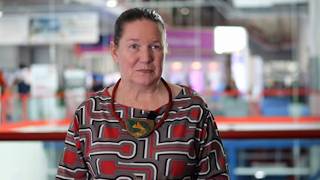
Gloria Iacoboni, MD, PhD, Vall d’Hebron Institute of Oncology, Barcelona, Spain, discusses a retrospective analysis evaluating the management of cytokine release syndrome (CRS) after CAR T-cell therapy for large B-cell lymphoma (LBCL), highlighting that early intervention for CRS at grade 1 was found to be associated with an increased risk of cytopenias and infections but did not affect the incidence of immune effector cell-associated neurotoxicity syndrome (ICANS). This interview took place at the 67th ASH Annual Meeting and Exposition, held in Orlando, FL.
These works are owned by Magdalen Medical Publishing (MMP) and are protected by copyright laws and treaties around the world. All rights are reserved.
Transcript
Yes, so at ASH this year, we have a poster talking about the management of CRS and ICANS in our patients. So we looked at a cohort of 500 plus patients who had received CAR T-cell therapy, CD19 targeted CAR T-cell therapy, you know, either axi-cel or tisa-cel in the third plus line setting, and compared the outcomes according to CRS management. So we know now that, you know, CRS can be intervened at grade one with both tocilizumab and or steroids following cohort four and cohort six data from ZUMA-1...
Yes, so at ASH this year, we have a poster talking about the management of CRS and ICANS in our patients. So we looked at a cohort of 500 plus patients who had received CAR T-cell therapy, CD19 targeted CAR T-cell therapy, you know, either axi-cel or tisa-cel in the third plus line setting, and compared the outcomes according to CRS management. So we know now that, you know, CRS can be intervened at grade one with both tocilizumab and or steroids following cohort four and cohort six data from ZUMA-1. And many centers are applying that strategy. And that is different to, you know, the previous, let’s call it conventional management that we did before the publication of this data, where intervention for CRS was usually reserved for grade two or higher. So we compared the conventional management, applying that term to intervening at grade two or higher CRS, no intervention in terms of tocilizumab or steroids for grade 1 CRS, versus an earlier intervention -so that means applying tocilizumab and or steroids to grade 1 CRS. What we observed was a similar, you know, CRS grade 3 or higher incidence.
We did observe a significant reduction of CRS grade 2 or higher for patients with an earlier intervention approach. In terms of ICANS, interestingly, we didn’t observe any differences, both in any grade ICANS, grade 2 or higher, grade 3 or higher ICANS. And I think what was more interesting about this abstract was really the data on cytopenias and infections, because we hypothesized that an earlier CRS management could perhaps lead to a decreased grade 2 or higher CRS incidence, but an increased risk of infections and or cytopenias. So when we looked at that, you know, infections and cytopenias grade according to ICAHT, so immune effector cell-associated hematotoxicity grading from EHA-EBMT, we observed that there was a higher incidence in those patients who had received that earlier intervention for CRS, that is to say at grade one.
And I think, you know, this is definitely a retrospective analysis, but I think it’s interesting data to try to tailor, you know, the management we are doing today, currently of our patients. I don’t think every patient is the same. I think we do have to, you know, assess, you know, many factors when we are deciding and we’re intervening at grade one or grade two or higher. But I definitely think that, you know, in some centers, there can be a bit of over-intervention, you know, applying many agents or many doses of that agent, you know, for just for a single, you know, grade one CRS after CAR T cell therapy. So I think this is kind of an exploratory abstract, looking at this hypothesis, and that will be presented as a poster on Saturday evening.
This transcript is AI-generated. While we strive for accuracy, please verify this copy with the video.
Read more...